

2006
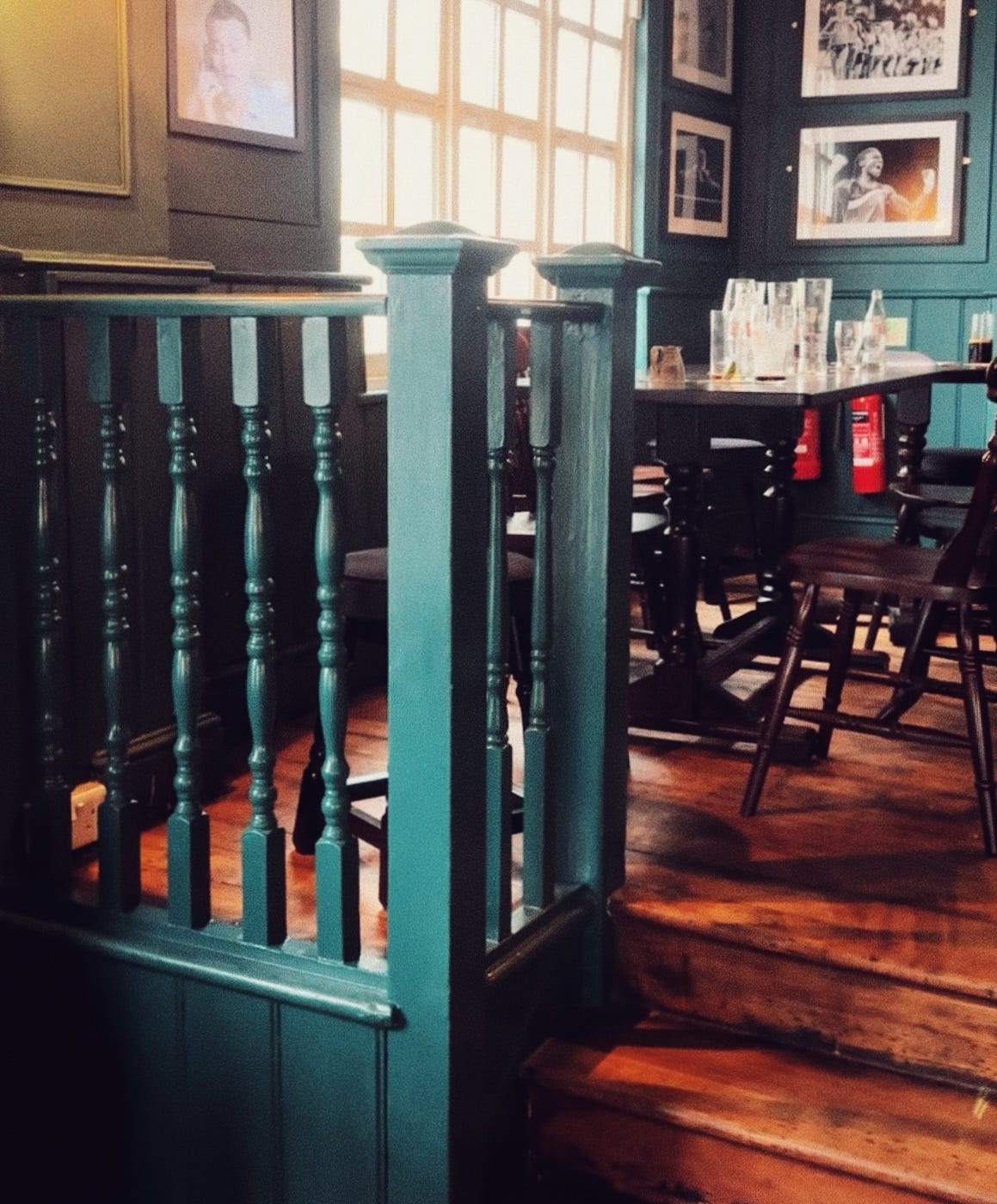
I still remember the place I sat waiting: a small table, just big enough for two, set a few paces back from the bar. I’d arrived with a smile, a joke to share with the bar staff, and a full bubble of excitement in my chest. The clocks had changed, the evenings were lighter, and it was one of those late spring days that Brighton does best; a day when we close the door on our winter warm homes and step out into the cool of the sun; a day before the tourists swarm; a day when the light reflects back off the white facades of Montpelier Terrace so brightly that it’s painful to look upon.
I drank my first pint quickly, still hopeful I suppose that she would come soon but, halfway through my second, time slipped from late afternoon to early evening and, as the tables around me filled with women - friends laughing after work, lovers marking the start of a date - I grew more self-conscious of my solitude. Anticipating I wouldn’t be on my own for long, I’d neglected to bring a book with me and, it being the days when the phones in our pockets were simply phones in our pockets, I had only tobacco, Rizlas, and the heft of my pint glass to occupy my hands. Though I’d been privy to the peace that a solo pint can bring, I still sometimes felt a little awkward - almost ashamed - to drink alone, even in a familiar queer space like The Princess Victoria.
When she eventually arrived, two hours behind me, my rush of relief was soon tamed by her apparent irritation at being drawn away from wherever she had been. We drank one more pint together and walked home in near silence. As we got into bed that night, I thought I could smell someone else on her skin.
2016
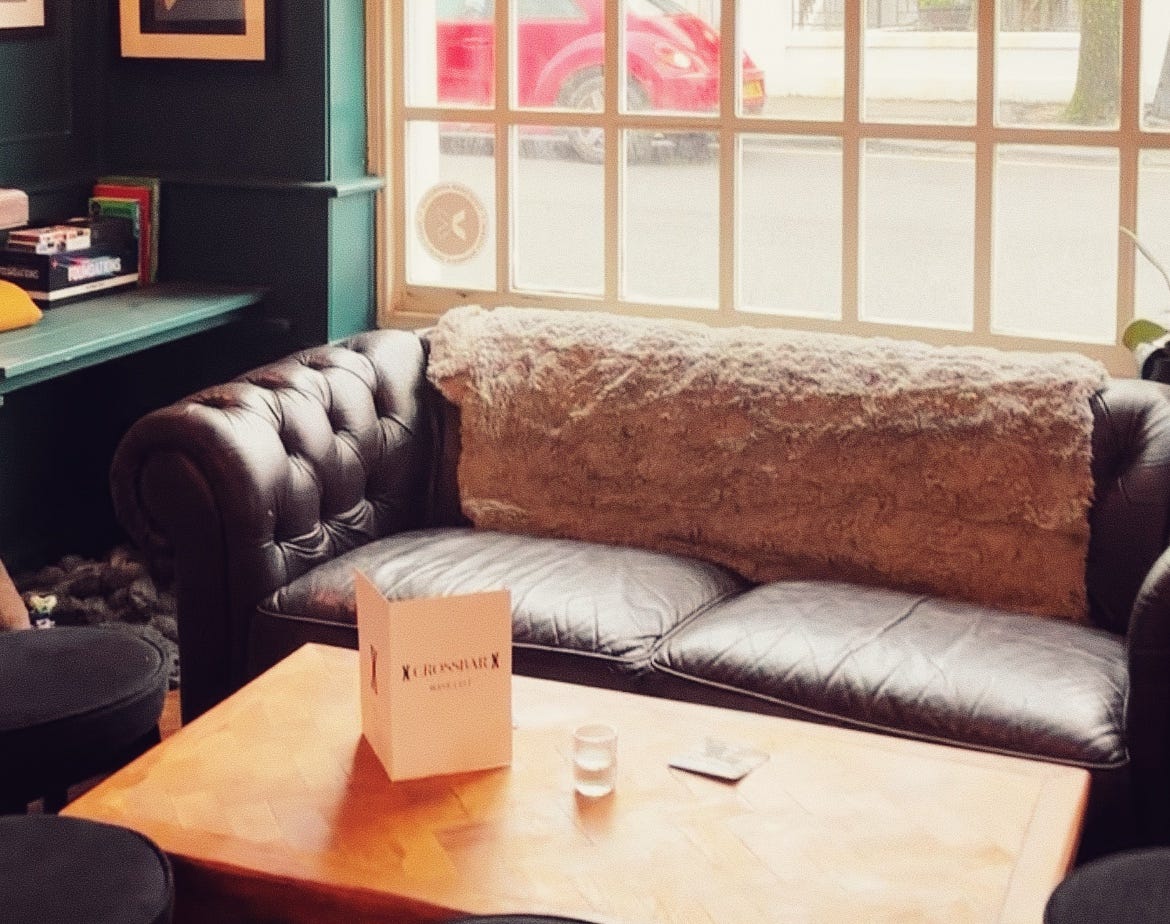
I still remember the place I sat drinking: a tiny room at the top of the stairs, barely large enough to hold the singular table we sat around. There were eight or nine of us, maybe more, but just one other woman. She was younger than me by a good ten years, pretty, with a Californian accent. The men were friendly and funny; eager to speak but willing to listen; no doubt unaware of how their voices dominated the space.
The wooden table between us was littered, not only with our glasses, but with fifteen or twenty bottles of homebrewed beer. Some bore neatly-typed stickers stating their contents whilst others could be identified only by rough, almost illegible, scrawls of glass marker across the shoulder of the bottle, or by scraps of paper fastened tight with elastic bands. On some, the remnants of former labels were still visible, sometimes scratched or partially lifted away, until only a whispered indication of their previous contents remained.
The more bottles shared, the louder and more difficult to follow the men’s conversation became so, after I’d shared my homebrewed contribution – a somewhat unsuccessful steam beer – I took some time away from the group and headed downstairs to buy a drink from the bar. With twenty-five keg lines and a well-stocked Belgian fridge, Craft Beer Co. had more choice than any other pub in Brighton, and it took me a while to decide. I eventually settled on a third of imported imperial stout which cost almost twice as much as a pint of the beer I used to drink.
By the time I got back upstairs, the American was sharing the beer she’d made, pouring a couple of centimetres into each of our glasses. It was an IPA, orange-gold and pin-bright, with a piney, citrusy aroma. As I put my stout down and took a mouthful of her IPA, the American explained that she liked to make beer so bitter it would punch you right in the throat, and something about the way she said it made me laugh so much I almost choked on one of the best beers I’d ever tasted.
2026
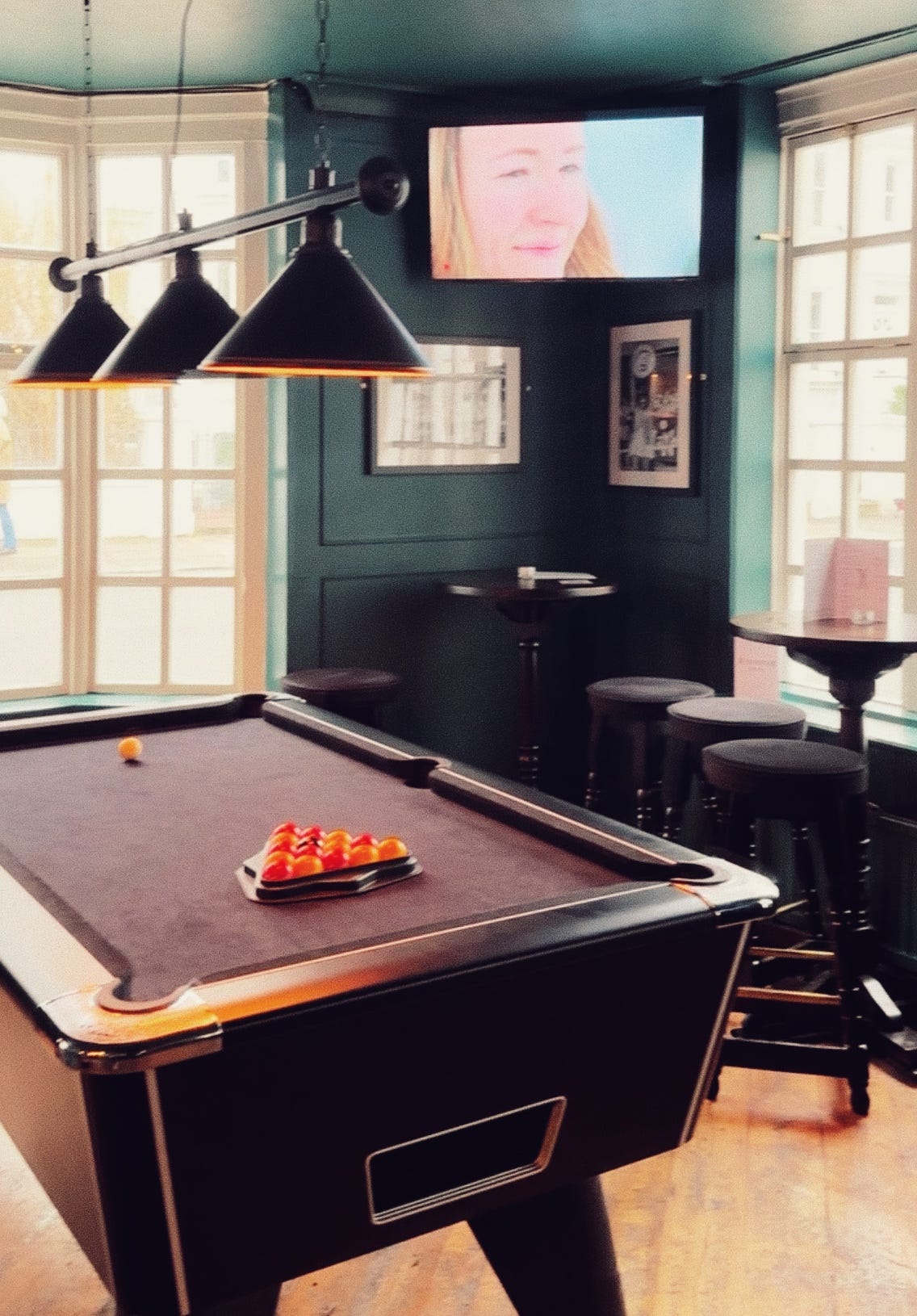
I still remember the place I sat watching: a large space above the bar, with tall windows on two sides that allowed the smoke-grey dusk to share the last of its light with the room. I sat beside a good friend at a small table crouched beneath a bright television screen, our necks tilted back to get a good view of the match. My right arm was in a brace, having broken my wrist playing walking football a few weeks earlier, so I’d carried my beer - a can of local ale – back from the bar in my pocket. Along the wall behind us was a row of black frames, each containing a football shirt pinned out like a prized butterfly and, hanging on the door to the room, a small, black pennant with the word ‘CLUBHOUSE’ written across it in uppercase white letters.
The first half ended goalless, and my friend and I were frustrated with the Lionesses’ performance; we’d been taught to expect more, particularly against a lower ranking team like Ukraine. During the break in play, amongst the women sitting on the tables around us, the same words were echoed: words that told of possession and close calls; lack of form and poor decisions; injuries and potential substitutions. The moment the whistle blew again, every face in the room angled back to the screen.
The second half brought seven goals, all but one of them for England and, before the ninety minutes were up, a drab Tuesday night was transformed into a Sweet Caroline celebration at Crossbar, and a venue that had been open for less than a month, managed to transform the result of a group qualifying match for a tournament still more than a year away, into all the things that unite the best pubs and the best of football: women’s laughter, good friendship, and a sense of belonging.
Today
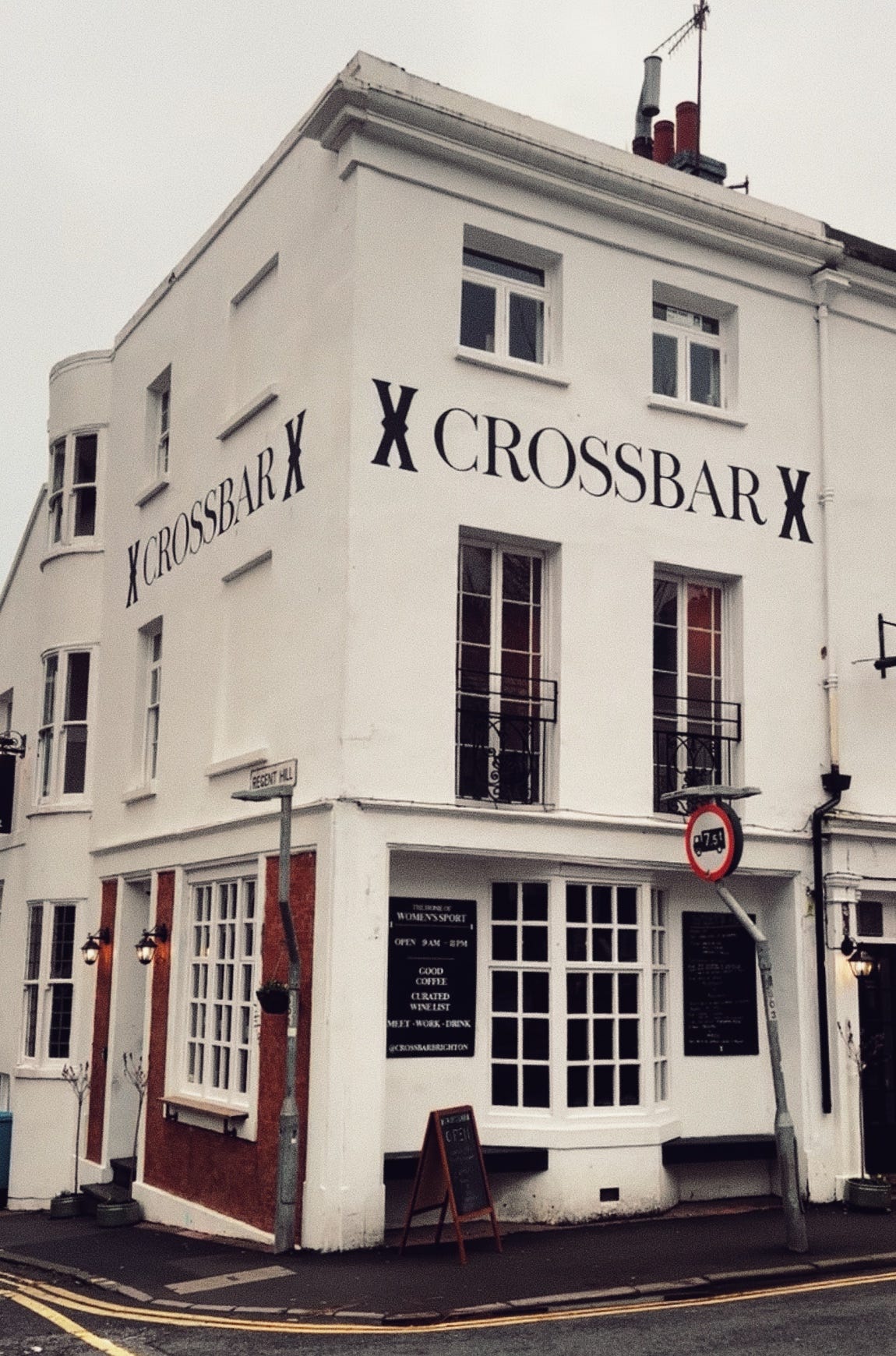
Sometimes, it’s in those places where there is the most life, that the most phantoms are to be found: the pubs in which you waited alone for a lover who no longer loved you back; the pubs in which you laughed out loud at the joy of discovering an understanding of new flavours; and the pubs in which you found a surge of celebration and a sense of belonging. Some pubs – given time - can do all of those things, but maybe not all at once. Because the truth is, though very different pubs, The Princess Victoria, Craft Beer Co., and Crossbar are, in fact, the same place. They each have the same walls, the same doorways, the same windows, and they each occupy the selfsame patch of ground. I don’t just mean metaphorically: they’re spatially identical though, of course temporally, they might as well be eons apart.
There’s been a pub on the corner of Upper North Street and Regent Hill in the centre of Brighton for a very long time and, for almost two hundred years, that pub was known as The Princess Victoria. For a short space of time at the start of the twenty-first century, The Princess Victoria – or The PV as it was known by its regulars – became a gay pub, mostly used by women. During that time, it was a place for flirting, for kissing, for drinking and occasionally dancing; a place that was far enough from the gay village of St James’s Street that not many men bothered to make the journey, and a place where the safety of the lesbians who drank there was assured. By the middle of the next decade, both the lesbians and The Princess Victoria name had been removed from the building and, following a short period as The Florist, it reopened as Craft Beer Co., the second in a string of specialist beer bars that began in London’s Leather Lane. For a few years the place was popular with beer nerds and beer curious, the hop-headed and full-bearded, and occasionally a small group of homebrewers who met in the upstairs room. Then, in January 2023, the doors of Craft Beer Co. suddenly closed, and remained that way for three full years until, just a few months ago, Crossbar, the UK’s first dedicated women’s sports bar, opened in its place. Now, the women are back and, across three rooms and eight screens, they’re watching other women engage in football, rugby, cricket, cycling, netball, motor racing, and just about every other sport there is.
Of course, it’s not unusual for pubs to change hands and open under new names, or even to completely reinvent themselves. But this particular pub is unique – to me at least – because it has evolved in such perfect synchronicity with my own life. As I have changed, it has changed in precisely the same way, to such an extent that, (with the exception of its brief stint as The Florist, a pub I was never tempted to visit) in the Venn diagram of its target patrons, I stand at the very centre of the overlapping circles. From the younger lesbian who tried but often failed to find love, to the beer fan who chased every trend, to the person I am now, a little more fragile perhaps, but content with my chosen family, my good friends, and my enduring love of football; for the past twenty years, this corner pub has mirrored my life.
The chances are this won’t be the final version of this place; like the tide that washes the beach, just a couple of hundred yards from the pub door, no amount of Canutes can halt the rush of change. If you live in the same place long enough, you can’t enter certain pubs without bumping into ghosts. They linger in the layers of paint on the walls, in the gaps between each floorboard, in the dusty folds of the curtains, on the sodden drip mats, in the damp of the cellar, and deep down amongst all the clatter and chatter, the broken hearts and new beginnings, the bright pop of wine corks and the stench of stale beer. But, like one of those old paintings that conceal the artist’s previous work underneath the current picture, the layers of paint will never be fully erased or covered over, and something of each iteration has the potential to occasionally bleed through, to remind, perhaps even to haunt. And I already know that at least one of the ghosts that stalks this place will one day be mine.